The AI Trust Gap: Why GEO Success Requires Partner Marketing
Your buyers do not trust your corporate blog.
Neither do AI models.
Welcome to the AI Trust Gap.
Generative Engine Optimization (GEO) is the new battleground for B2B SaaS growth. When buyers ask ChatGPT for software recommendations, the AI demands external validation. It is 6.5 times more likely to cite a third-party source than your own content. In the AI-driven era, what partners say about you matters more than what you say about yourself.
Buyers distrust polished marketing, and the algorithms match their skepticism. If GEO influences what AI sees, partner marketing drives it.
Over 40% of the third-party content cited by AI already carries affiliate links or sponsorships. Partner marketing and GEO strategy are no longer separate conversations. Your partner program is your primary AI visibility engine.
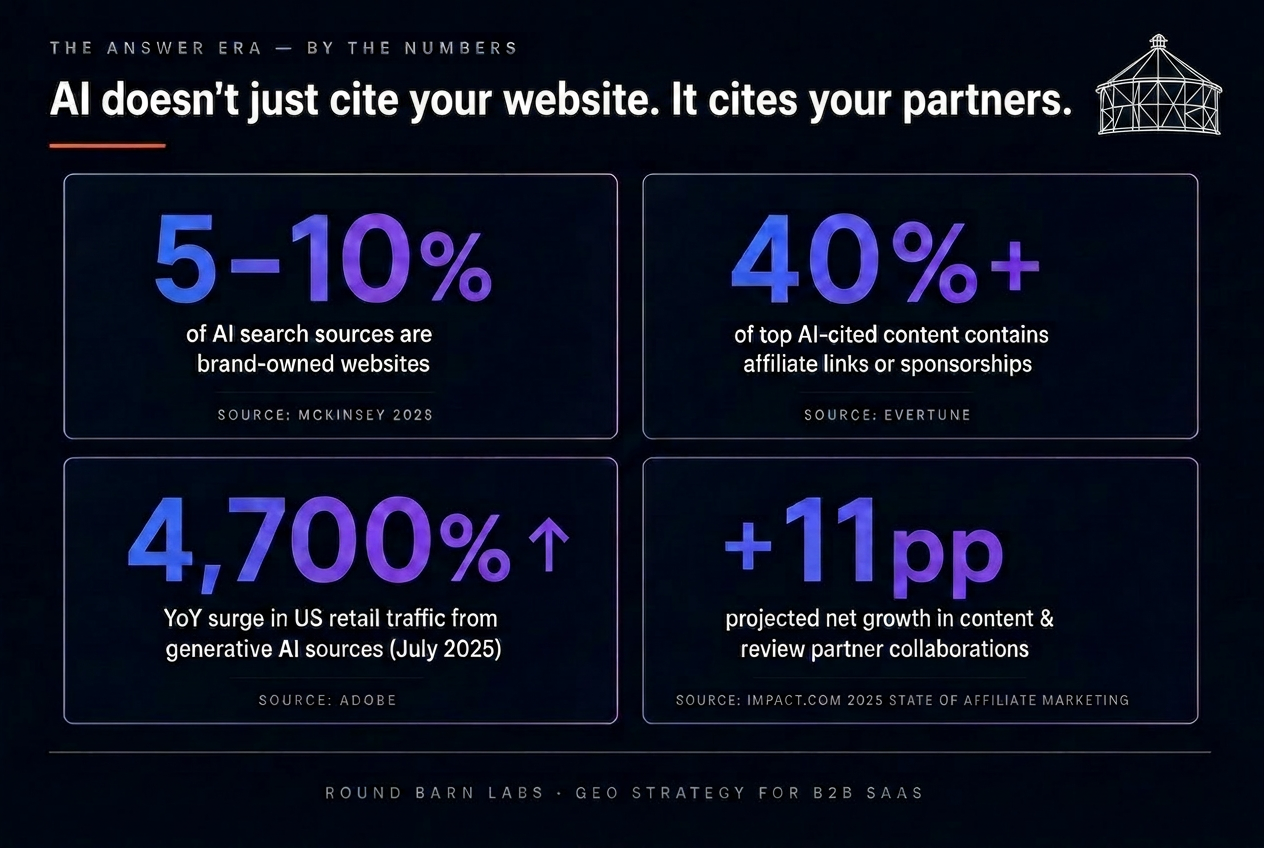
The Ecosystem Engine: Where AI Finds “Trust”
AI doesn’t trust you. It trusts your ecosystem.
A 5,000-prompt study by Jordan Koene & Previsible found that AI models hunt for “Entity Trust.” They systematically cross-check your brand across third-party platforms before making a recommendation.
Here is exactly where AI scrapes:
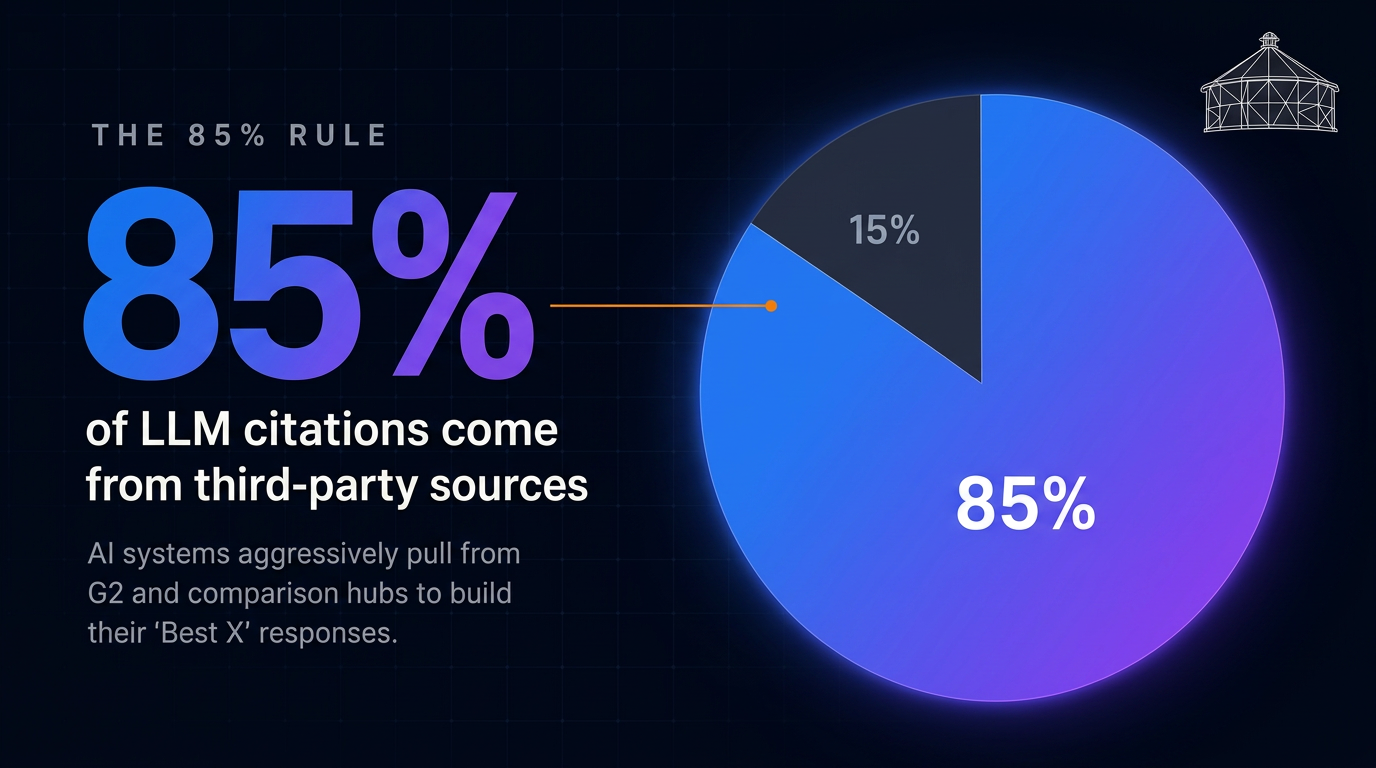
- Review Sites (The 85% Rule): For broad category searches (e.g., “Best marketing automation tools for mid-market”), 85% of AI citations come from third parties. AI systems aggressively pull from G2 and comparison hubs to build their “Best X” responses. Why? Because AI models heavily favor the structured format—pros, cons, and comparison tables—that review hubs strictly enforce.
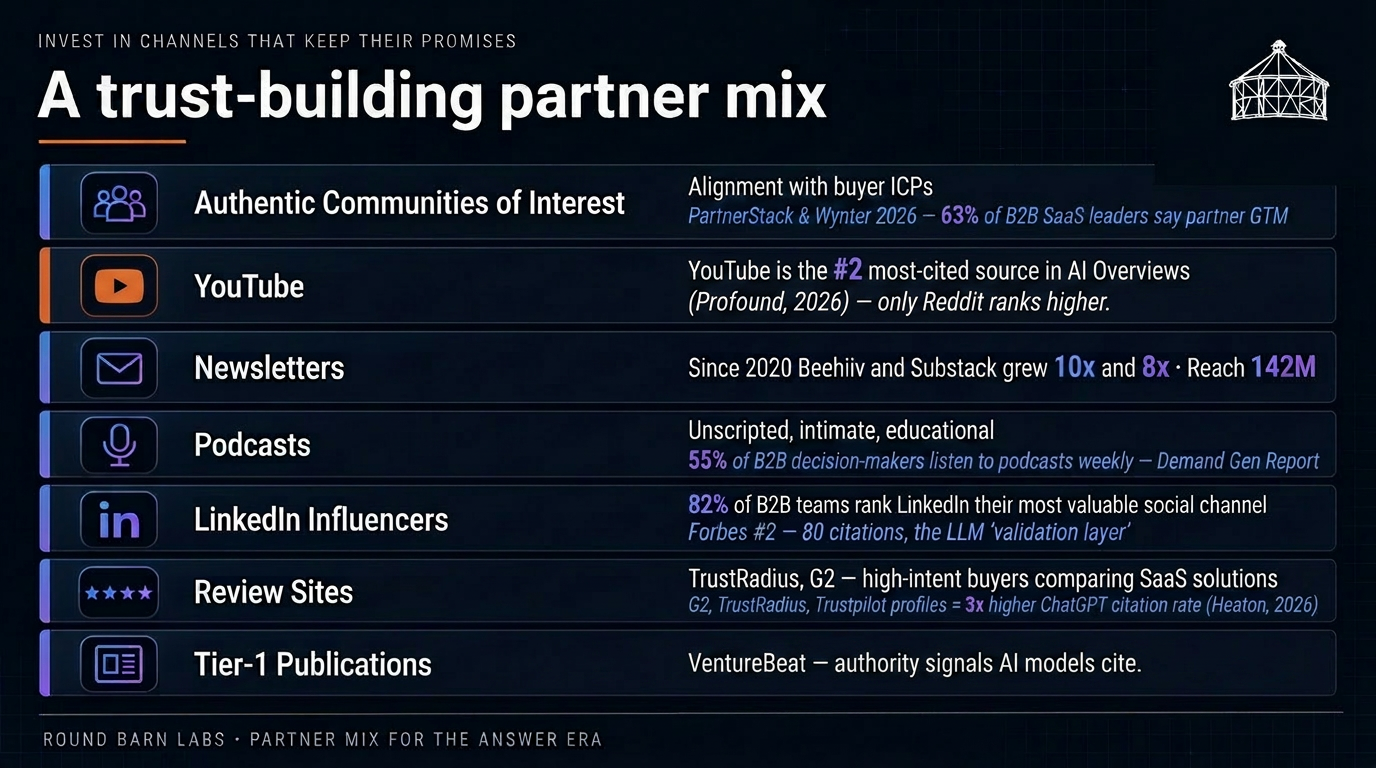
- Top-Tier Publishers: AI largely ignores mid-market SaaS blogs. A March 2026 AuthorityTech study showed AI citations are hyper-concentrated in legacy media. TechCrunch and Forbes act as explicit “validation layers” for LLMs.
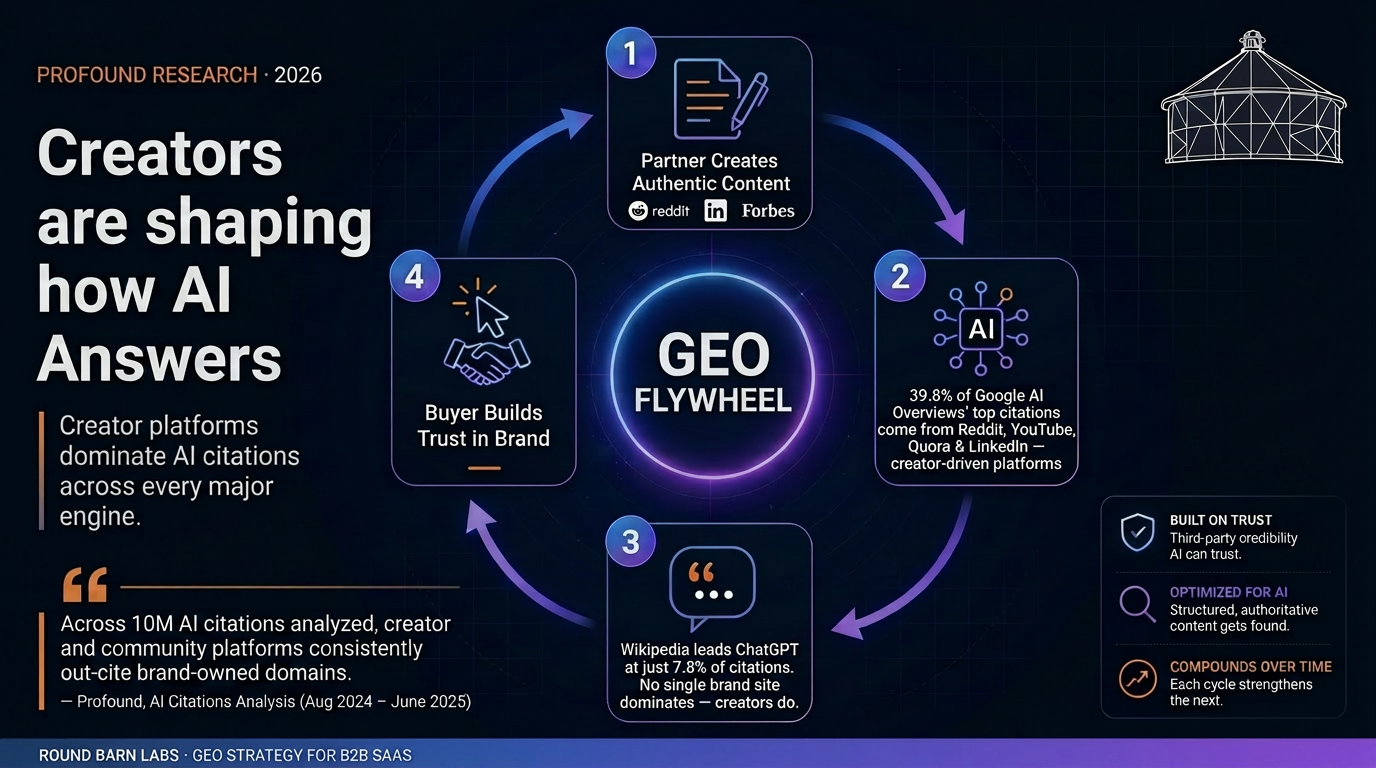
- Creators & Social Media: AI craves real human experience. YouTube now appears in 16% of general LLM answers. Perplexity pulls an astonishing 46.7% of its top citations directly from Reddit.
The Proof: The $400M to $1 Billion ARR Strategy
I was at SaaStr in May, talking with one of the absolute best minds in SaaS growth.
She leads an AI-native powerhouse already hitting $400 million in annual recurring revenue.
I asked her the only question that mattered.
“You’ve grown to $400 million. How do you take it to $1 billion?”
She looked at me and delivered a one-word answer.
“Partnerships.”
The logic is ruthless. AI models constantly devour high-authority websites to decide what is true. When you place the right article with a trusted partner, you train the AI. You shape its answers within weeks.
In an April 2026 eMarketer report (How Creators Are Shaping GEO Strategies), B2B influencer spend jumped by ~250% in a single year, growing at ~47% YoY (mostly on LinkedIn), noting that creator content directly shapes how AI answers questions. This proves that creator content is one of the fastest-growing surfaces for GEO.
This validates the Round Barn Labs thesis that trust is the new oil and third parties are simply more trusted than brands themselves, given we live in a trust gap.
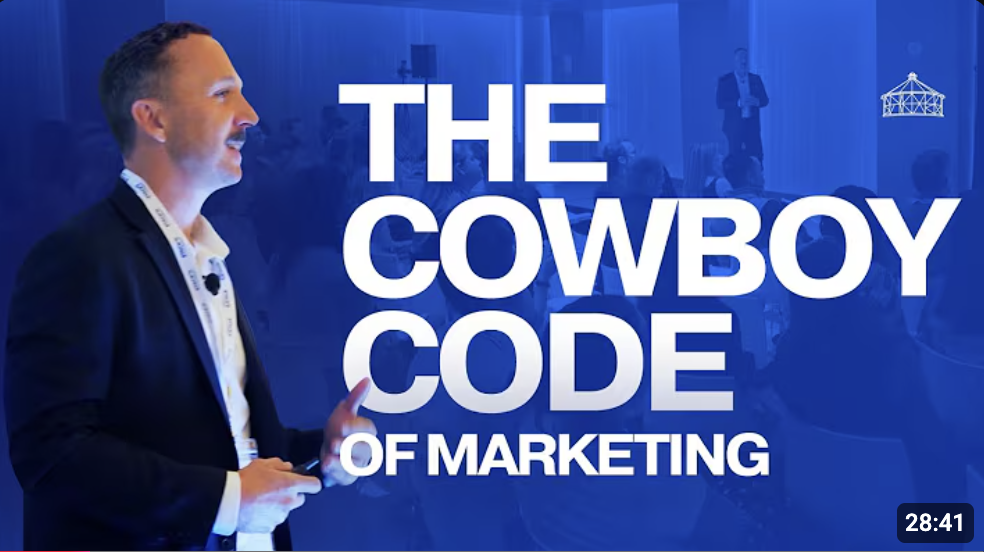
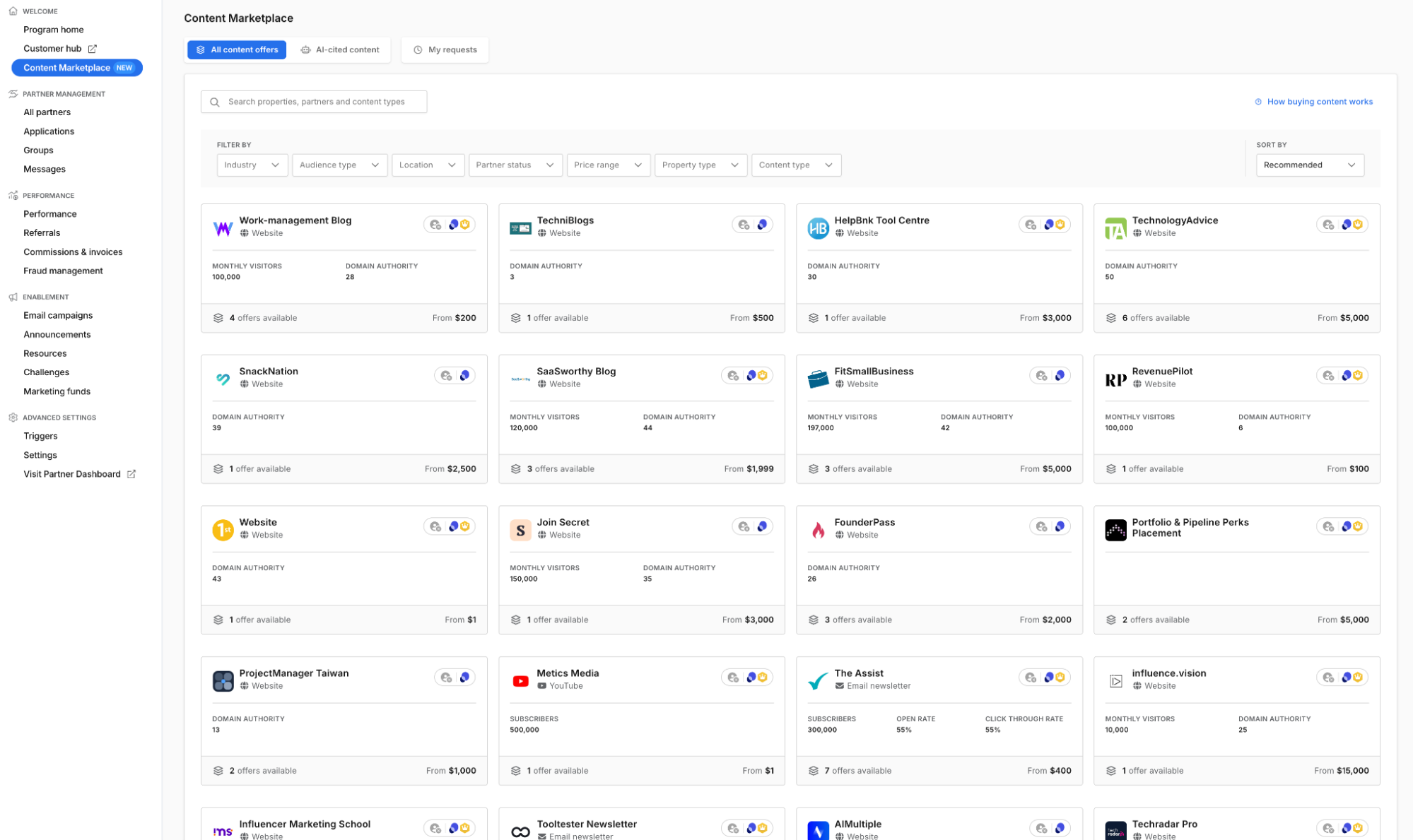
I spoke about this in my Cowboy Code talk at PartnerStack’s annual Stack’d conference, and PartnerStack and other networks are leading this charge in the partnership ecosystem, building entire workflows for this.
The New GEO Playbook: Retooling for AI Search
Smart SaaS Brands are abandoning the illusion of owned domains, doing all the GEO lifting. They are moving their narrative into the ecosystem instead. To close the Trust Gap, you must make three immediate shifts:
- Redefine Partner Metrics: Stop judging partners purely on last-click revenue. It’s a trap. Demand impression data from your networks and plug those full-funnel signals—impressions, clicks, leads, and revenue—directly into your Marketing Mix Modeling (MMM). Extract metrics, such as prompt-based mention volume, from Profound directly into your data layer. Then, start tracking the signals AI actually cares about: the volume of third-party assets created, explicit brand mentions, and your footprint in AI footnotes.
- Target the Narrative Kingmakers: Map out the most influential publishers, review hubs, and creators in your category. Approach them with clear, performance-based deals. You aren’t just buying traffic; you are securing the verifiable, third-party validation that AI algorithms require to recommend you.
- Co-Create Structured Content: Feed the bots, but let humans speak. Work with high-authority partners to build assets that address specific buyer queries (e.g., “alternatives to X”). Require explicit brand names and strict comparison tables so AI bots can extract your data effortlessly. The catch? You must let the partner use their own authentic voice. Corporate marketing speak kills the exact trust you are trying to build.
Caveat: Yes. Your site and owned media are not going away. But earned and paid third-party content can scale revenue to great heights and help you build trust where little exists and address what AI models need to see to deliver citations for your brand on relevant prompts.
My Challenge to You: Open Claude, Gemini, and ChatGPT right now. Type this exact prompt: “Compare [Your Brand] vs. [Your Top Competitor].” Look closely at the footnotes.
If your competitor’s recommendations are backed by an ecosystem of active partners, publishers, and review hubs, while yours point solely to your own website, you aren’t just losing real estate. You are losing the Trust Gap.
Your first action item isn’t to write another blog post. It is to get your brand written into the ecosystem. We can help.
Curious how your brand ranks in the 'Trust Gap'? Get a baseline Partner & GEO visibility audit →