The Affiliate Evolution: Why Strategy Is Shifting (But Measurement Isn't)
Something strange is happening in performance marketing right now. Brands are rebuilding their partner strategy for an AI-mediated buying journey — new partner types, new networks, new visibility goals — while still grading the entire channel with a measurement system designed for a single browser cookie and a single click.
The 2026 PMA Performance Marketing Brand Survey makes the gap impossible to ignore. Five signals tell the whole story.
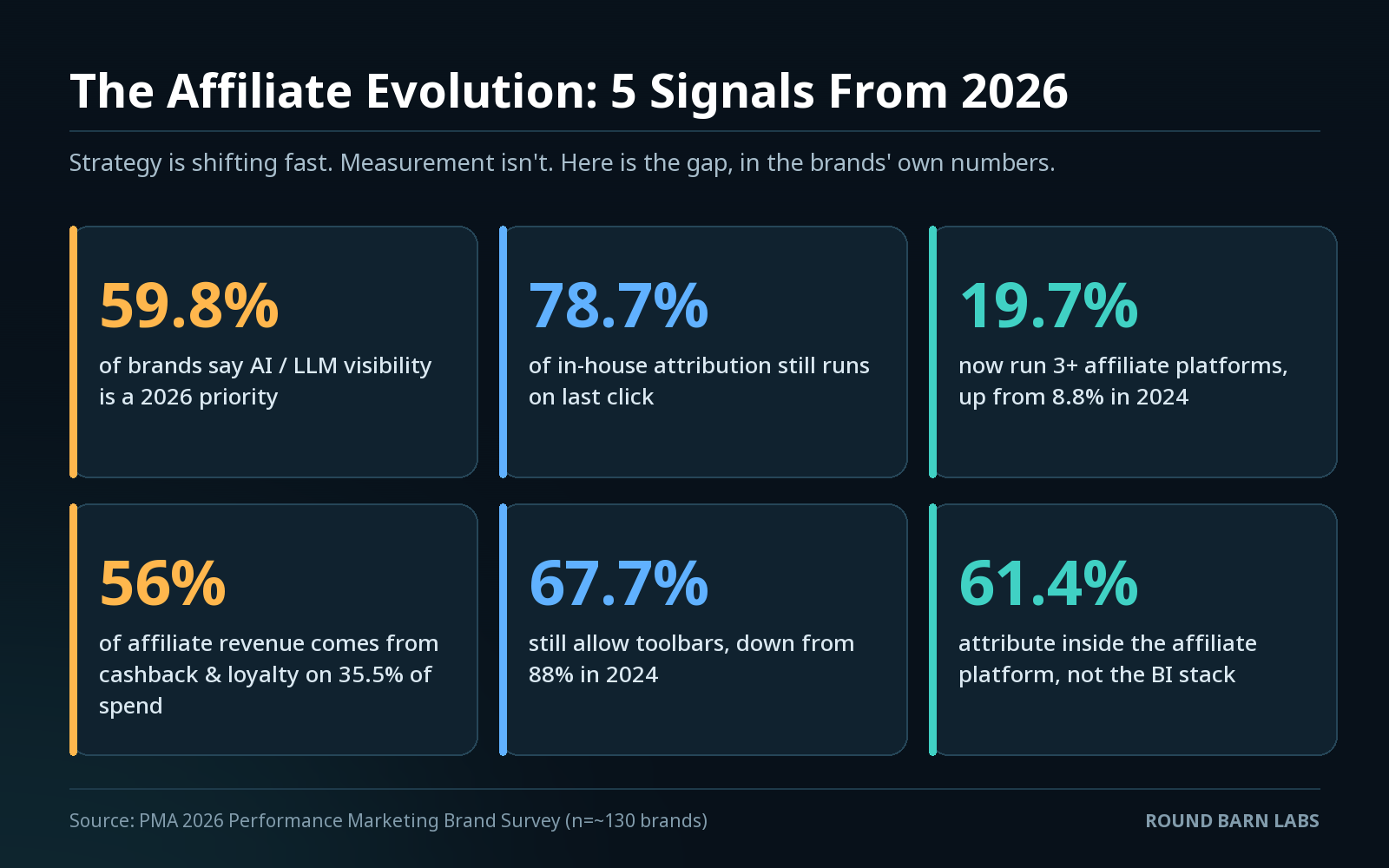
1. AI Visibility Became a Real Budget Line
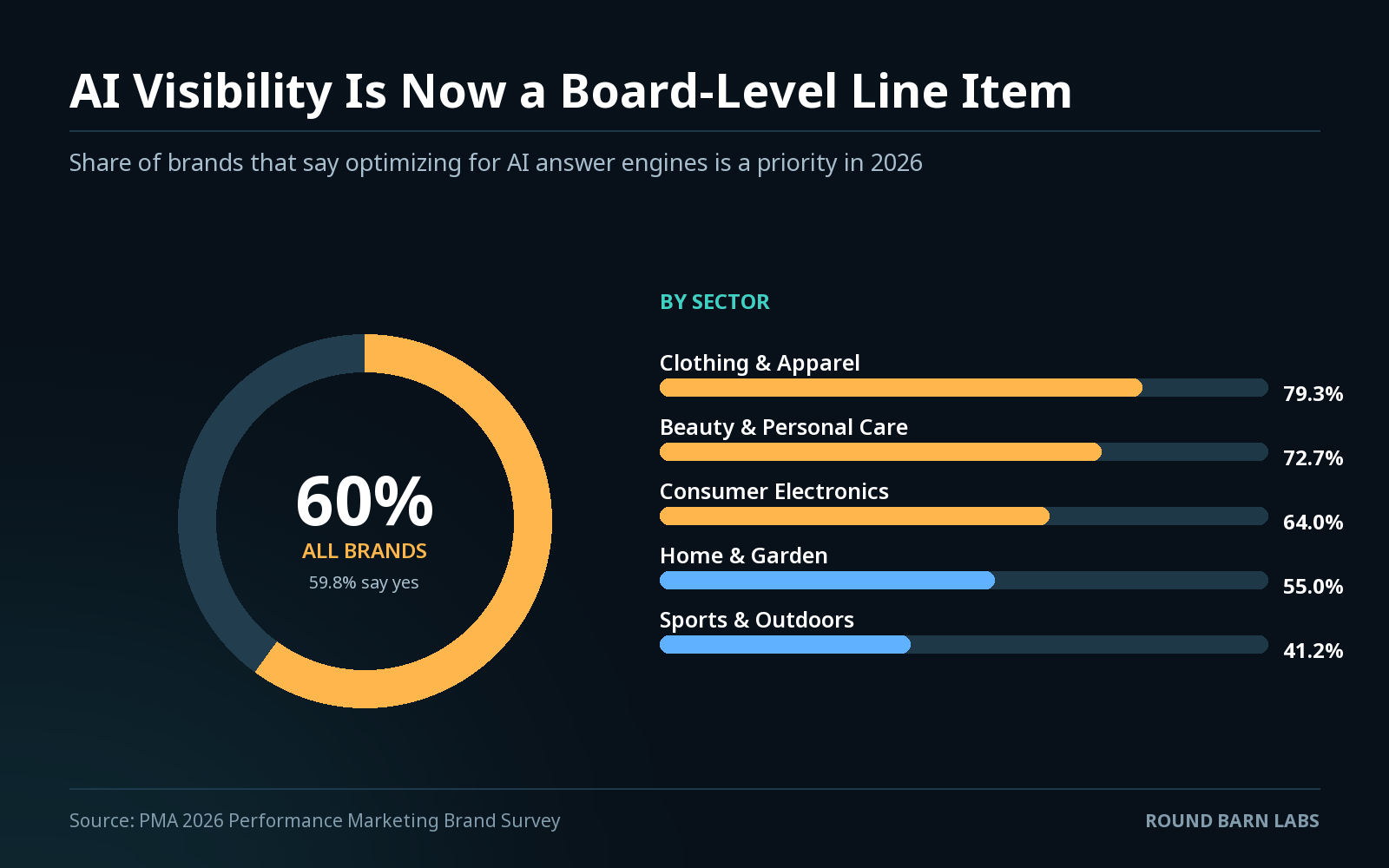
59.8% of brands say optimizing for AI answer engines is a 2026 priority. Apparel (79.3%) and beauty (72.7%) lead the way, while sports & outdoors (41.2%) lags. AI visibility is now a board-level line item.
I am very curious about the 40% of brands that say it is not a priority in 2026.
Consider how a modern buyer actually converts: they discover a brand through a creator, validate it in reviews and AI answer engines, and days later a cashback extension captures the final click before the customer closes the tab.
In the last 10 years, the “affiliate market” has shifted to content and creators, but the measurement tools and understanding have not.
2. The Funnel Divide
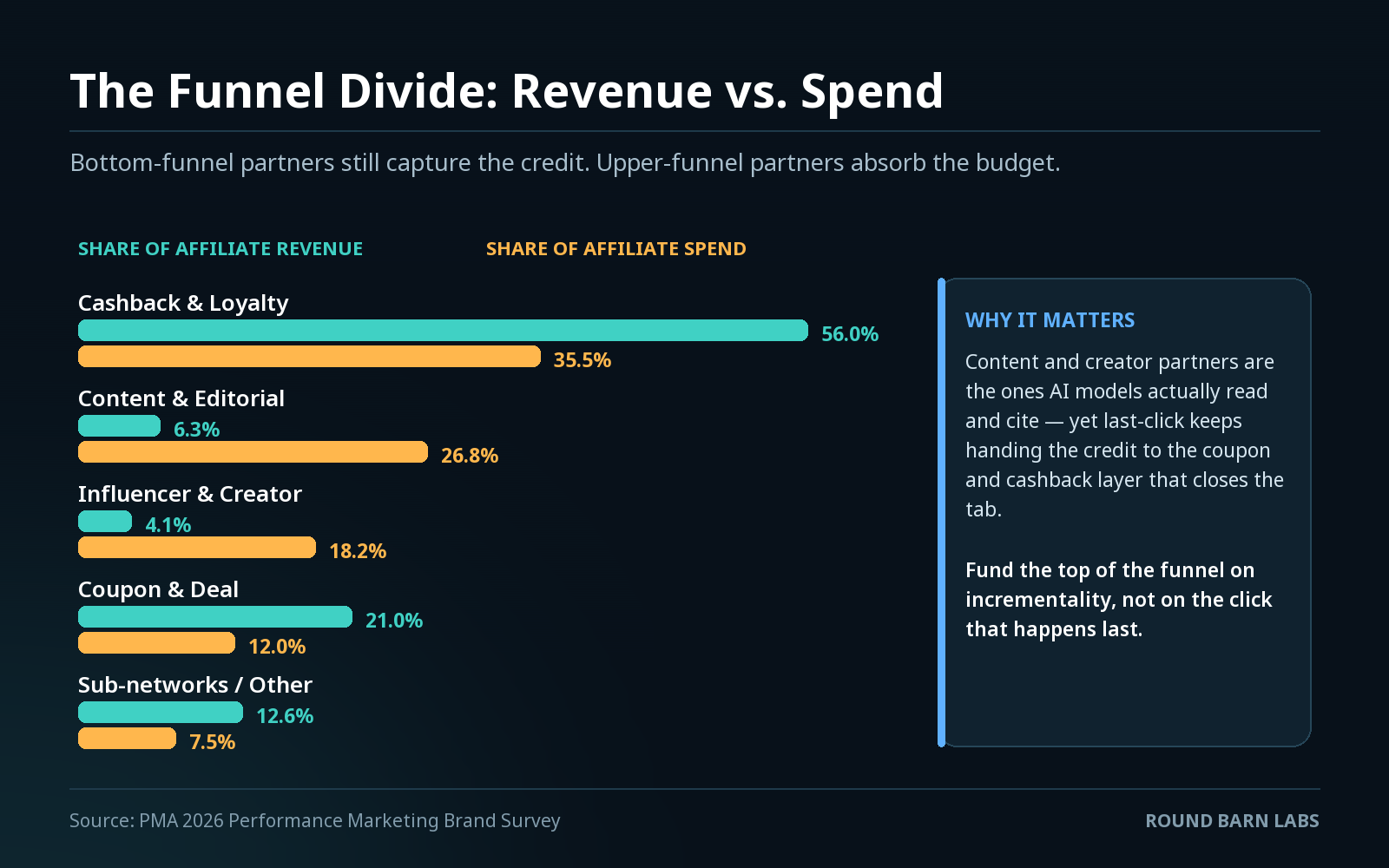
Cashback and loyalty partners drive 56% of affiliate revenue on just 35.5% of spend. Content drives 6.3% of revenue on 26.8% of spend. Creators drive 4.1% on 18.2%.
Read literally, that says bottom-funnel partners outperform everyone. Read correctly, it is a measurement artifact, not a performance verdict — last-click attribution credits the partner nearest the conversion, not the partners that created the demand in the first place.
This is another reason the affiliate partner and creator industry needs to align on measuring impressions and exposure data to more accurately account for and value partners that introduce and influence behavior earlier in the buying cycle. It's also a way to match affiliate marketing with MMM (Marketing Mix Modeling or Media Mix Modeling), one of the critical levers of marketing and measurement leaders to answer the holy grail question of what marketing channels and campaigns actually move the needle and which ones don't.
3. Brands Are Going Multi-Network Fast
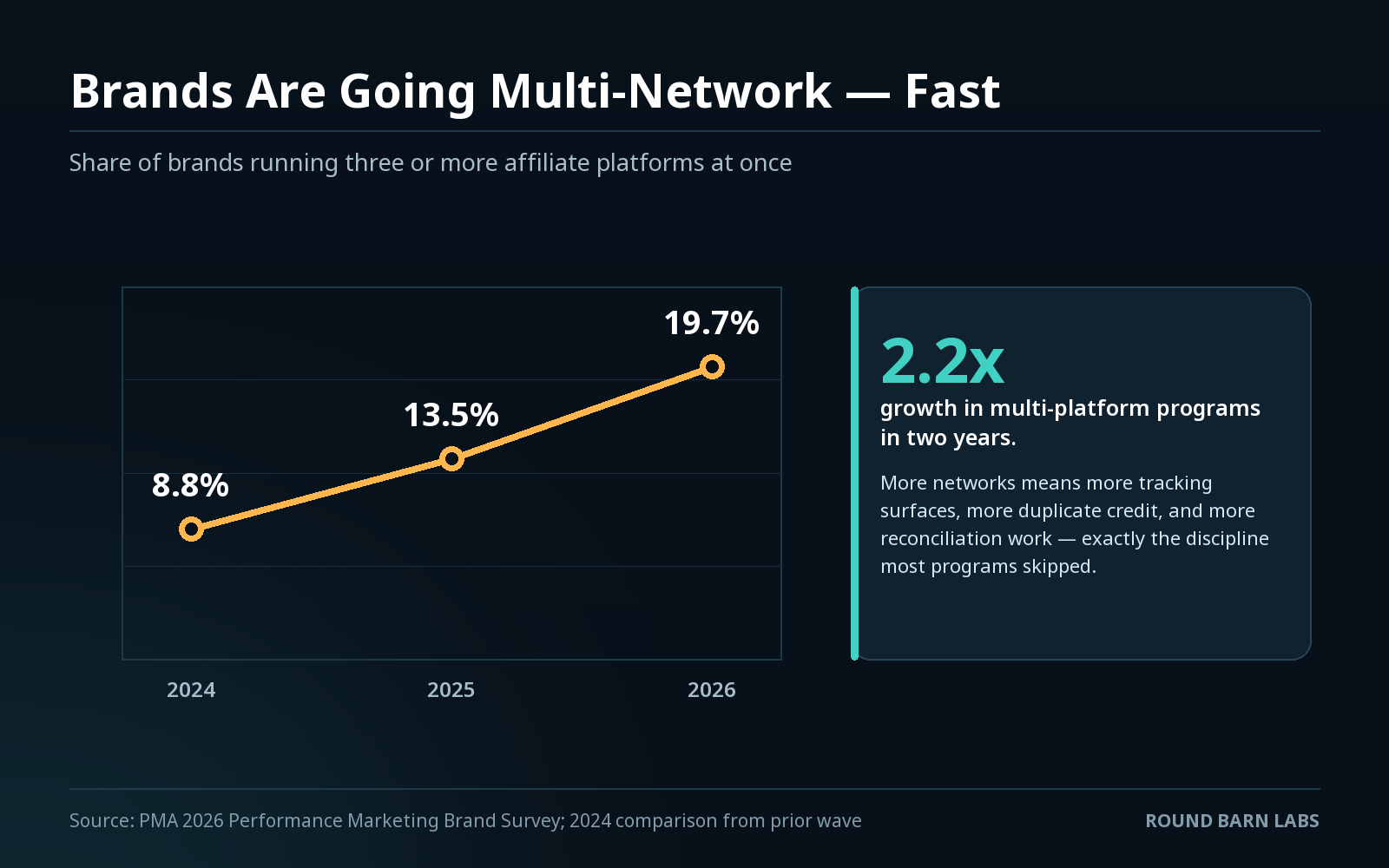
Programs running on 3 or more platforms grew from 8.8% in 2024 to 19.7% in 2026 — a 124% jump in two years. Multi-network is no longer an edge case; it is becoming the default architecture.
If you are a brand considering a multi-network strategy please message me or my team so we can talk you through the options and considerations on this. There are measurement and cost / value trade offs that I would like to learn more about and provide you with my unedited counsel. Caveat emptor.
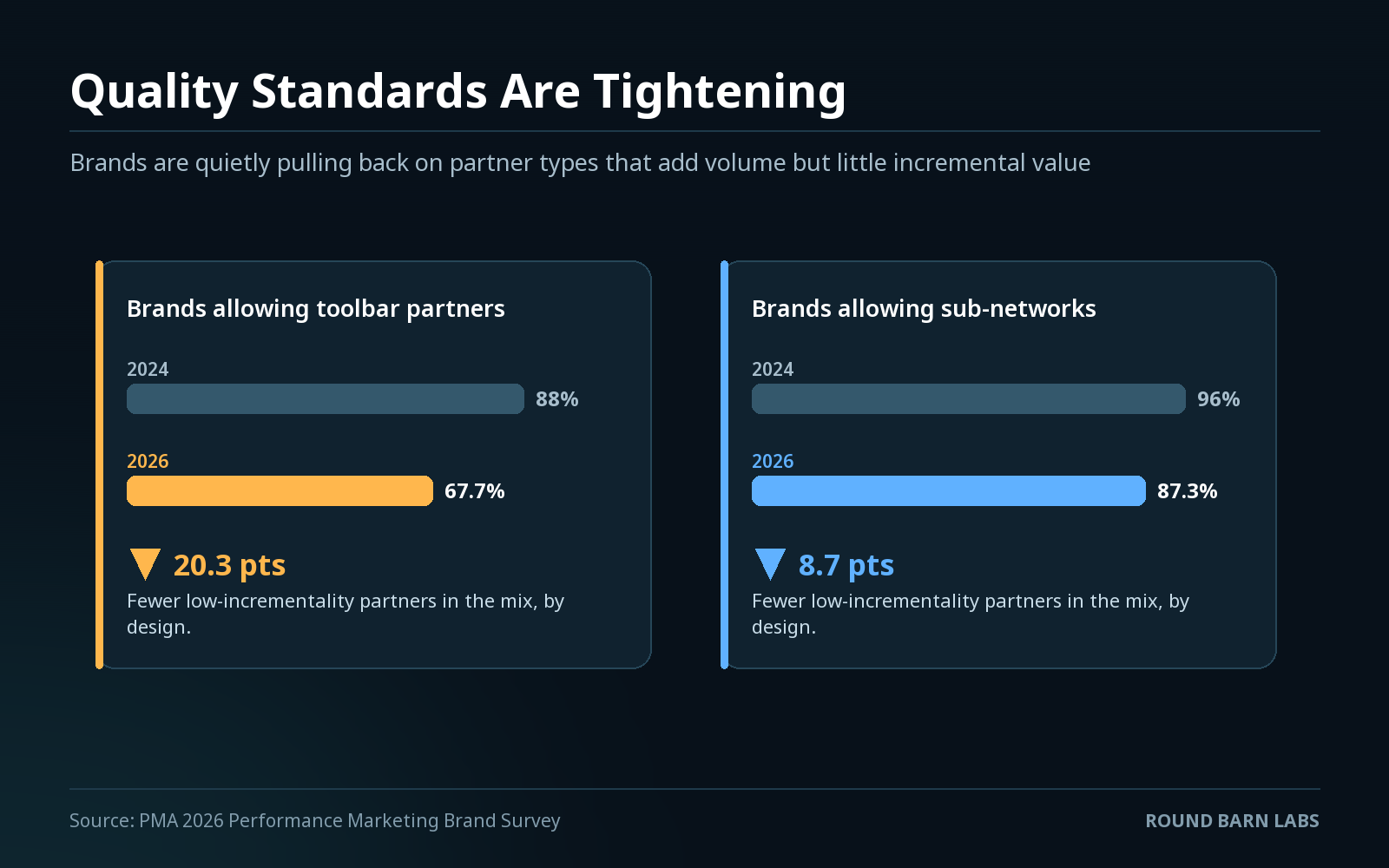
4. Quality Standards Are Tightening
Toolbars are now allowed by 67.7% of programs (down from 88%), and sub-networks by 87.3% (down from 96%). Brands are pruning low-quality demand capture in favor of partners that genuinely introduce and influence buyers.
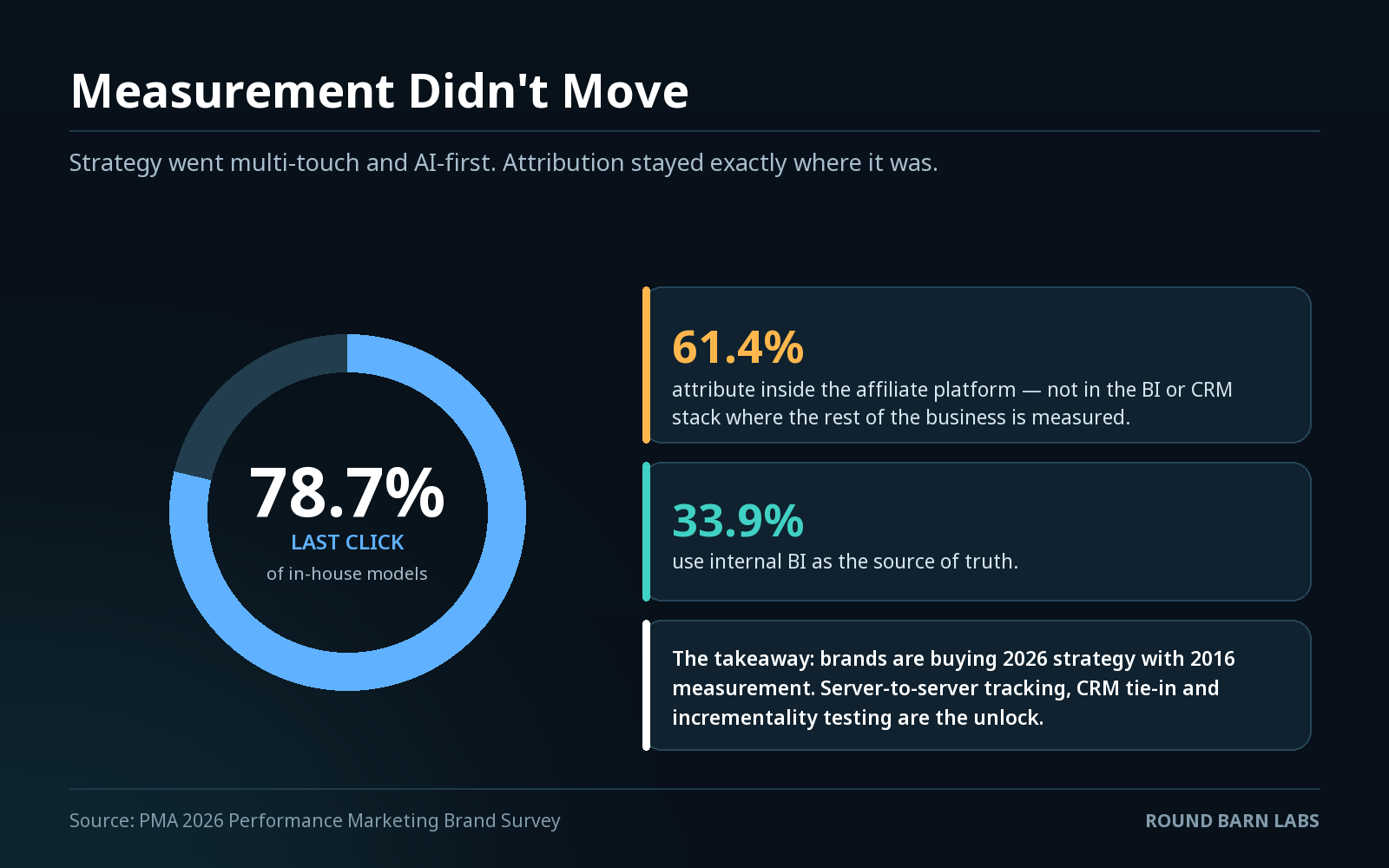
5. Measurement Didn't Move
78.7% of programs still run on last-click attribution. 61.4% treat the affiliate platform as the system of record. Only 33.9% use internal BI.
Strategy has entered the AI era. Measurement is still living in the cookie era.
What to Do About It
- Move to server-to-server (S2S) tracking + CRM integration: browser pixels and cookies are no longer a trustworthy foundation for partner measurement.
- Reconcile monthly: compare network-reported revenue against your internal analytics every single month. Catching de-duplication and tracking leakage early is the cheapest margin you will ever find. Talk to an outside counsel with deep affiliate expertise to assess if you actually need three networks. If you do, please ensure you are using at the very least Google Analytics and preferably a viable MTA multi-channel tracking tool like Northbeam, Rockerbox or TripleWhale or an in-house attribution solution to de-duplicate across the three channels and see the IP address, referring URL, Partner IDs and traffic sources to validate where partners are interacting and how.
- Fund the upper funnel on incrementality: content and creators will never win a last-click report, so judge them on incrementality tests and exposure data instead.
- MMM MMM MMM: It is high time for MMM (Marketing Mix Modeling or Media Mix Modeling), which can be one of the most powerful levers to determine true incrementality - if a channel or marketing tactic is actually adding value in influencing purchase/action.
- We Need Exposure: Please join me in the small chorus of professionals and measurement enthusiasts in demanding that the affiliate partner and influencer ecosystem track impressions and exposure, not just clicks and actions, to be more compatible with these all-important MMM models.
- Treat citations as a KPI: track where partners and publishers earn you visibility inside AI answer engines, not just where they rank in search.
- Prune for quality: keep tightening the standards on browser extensions, sub-networks, and low-intent demand capture.
Bonus
Eric Seufert recently called out the need for the CMO role to be more of a chief economist at a brand. While I do not think it needs to go quite that far, I do think it points to the critical value of measurement, and how far we have to go to get the measurement function and understanding improved to better track and understand the bets we place as brands and as marketers.
Do you agree?
A Note on the Data
This anonymous data, shared by brands and agencies that want to improve the affiliate and partner marketing ecosystem, is one of the few ways we get data and insights like this.
The PMA, Tricia Meyer, and the Measurements & Insights Council are groups I am honored to serve with, and I highly recommend you join and participate to ensure your voice is heard and your insights are part of the value we give and receive in this great community of partner marketers!
Source: PMA 2026 Performance Marketing Brand Survey with analysis by Round Barn Labs.
Get Your Partner Program Audit